top of page
Fists in Solidarity

Blog


One of the most powerful moments in this week’s parsha, Beshalach, is not the splitting of the sea but what happens before it. The Jewish people have left Egypt, slavery is behind them. Yet they now stand trapped between Pharaoh’s advancing army and the Reed Sea. Fear sets in. Confusion reigns. Different opinions fly around. No one knows what to do.


Moshe turns to G-d and the response is surprising: “Go forward.”


Go forward… where? There is no plan. No visible miracle. No clarity.


It is only when Nachshon ben Aminadav, leader of the tribe of Yehuda, steps into the water walking forward until it reaches his neck that the sea finally splits. The path opens after he moves.


This moment teaches a timeless lesson, Clarity often comes after action, not before it.

How often do we do the opposite? We make New Year’s resolutions but don’t start because we haven’t figured out the “perfect” system. We intend to exercise but wait until motivation magically appears.  We want to grow but delay until fear disappears and then three months pass… and nothing has changed.


Nachshon shows us another way. Growth doesn’t begin when fear leaves, it begins when we move despite fear, One simple but powerful tool emerges from this moment:

Start before you’re ready, Don’t wait to feel confident. Take one small step forward and let momentum do the rest, as the Nike line goes, just do it!. Action creates movement. Movement creates clarity.


But Beshalach doesn’t stop there, soon after crossing the sea, the Jewish people are attacked by Amalek. The Torah describes Amalek not just as an enemy, but as a force that brings doubt, weakness, and coldness of spirit. Their goal is not only to fight, but to drain confidence and hope.


Here is a nation that has just witnessed miracles, left centuries of slavery, and tasted freedom, yet they are still vulnerable to doubt.


Why? Because while they had left Egypt physically, Egypt had not yet left them mentally.

In Hebrew, Mitzrayim (Egypt) shares the same root as meitzarim, constraints, boundaries. Slavery doesn’t only create external limitations; it implants internal ones: “I can’t.” “It’s safer not to try.” “Who do I think I am?”


This is why personal growth requires more than external change. A new job, a new habit, or a brave decision is only the beginning. Inner freedom takes work. Amalek Lives in the Mind, Chassidic teachings explain that Amalek represents inner doubt, the quiet voice that undermines courage and convinces us to retreat.


The Torah commands us to constantly “erase Amalek.” On a personal level, this means learning to interrupt destructive thinking patterns.


Here’s a second practical tool from this week’s parsha: Stop negative thoughts in their tracks. When doubt arises, don’t debate it endlessly. Say Stop. “I will not entertain this thought.” “I choose courage over fear.”


Just as the sea didn’t split through analysis, inner breakthroughs don’t happen through overthinking. They happen through decisive action.


Beshalach teaches us that freedom has two stages:

  1. The courage to step into the water before it splits

  2. The commitment to uproot the inner limiting thoughts that may linger afterward


True growth means taking responsibility for both. If you feel stuck, perhaps you’re waiting for clarity that only action can bring. If you’ve already taken steps but still feel doubt, perhaps you’re still shedding Egypt from within.


Either way, the message is the same: Jump in. Change what you’re focusing on. Take control of the direction.  You don’t need the whole path—just the courage to take the next step. The sea still splits for those who move forward.

This week’s parsha is called Bo—a small word with a powerful message. Bo means come, not go. When G-d instructs Moshe to confront Pharaoh, He does not say, “Go to Pharaoh.” He says, “Bo el Paroh”come to Pharaoh. In other words: You are not going alone. I am with you. We are doing this together.


That subtle shift in language carries an enduring life lesson.


So often, we feel that if something matters, we must handle it entirely on our own. We tell ourselves that unless we can see the whole path clearly—unless we have the energy, confidence, resources, and certainty of success—it’s not worth starting. Anything less than full control feels like failure.


But Judaism teaches a different way of thinking.


The Mishnah in Pirkei Avot reminds us: “You are not free to desist from the work, but neither are you obligated to complete it.” Our responsibility is not to finish everything. Our responsibility is to begin.


This applies on a global level—and just as much on a deeply personal one. There are dreams we carry that feel distant. Ideals that inspire us, yet seem out of reach. We may lack the time, the stamina, the clarity, or the tools to see them through. And so we wait. We postpone. We convince ourselves that when conditions are perfect, then we’ll act.

Parshat Bo tells us: don’t wait to go—come.


Come with what you have. Come with uncertainty. Come with doubts. Come with small steps. You are not alone in the process.


What matters most is the willingness to start—to move forward a little each day. Progress does not usually arrive in dramatic breakthroughs, but through steady, consistent effort. Over time, those small steps compound. What once felt impossible begins to take shape.

We sabotage ourselves when we allow fear, doubt, or imagined expectations to paralyse us. When perfection becomes the gatekeeper, nothing gets done. Growth begins the moment we get out of our own way.


Bo reminds us that wherever we are asked to go in life, we are not being sent alone. We are coming—with the blessings, abilities, and resources already placed within us. We are here on a mission, capable of far more than we realise.


Set the goal. Aim for it. Push forward, gently but persistently. And trust that you are not walking this path by yourself.


We are not meant to finish the world—but we are meant to improve it, one step at a time, leaving it better than we found it.


In parshas Va’eira, we encounter one of the most visually dramatic moments of the ten plagues: the plague of hail. Fire and ice descend together, smashing the Egyptian landscape with unprecedented force. Yet the Torah pauses to tell us something seemingly technical, almost agricultural: certain crops were destroyed, while others survived.


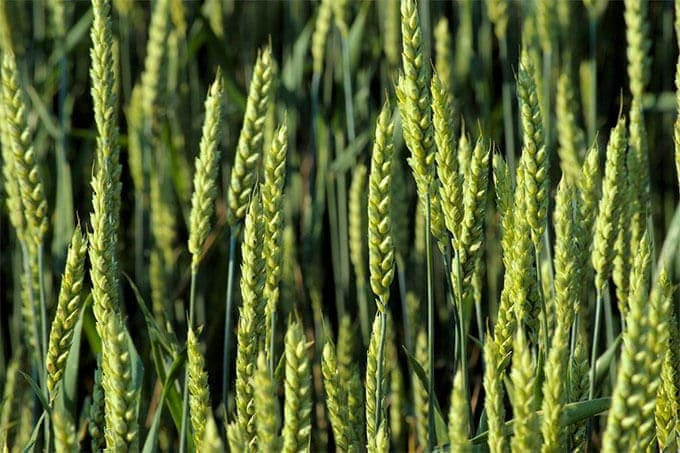
The flax and barley, which had already ripened and hardened, were shattered by the hail. The wheat and spelt, however, were still soft and unripe. Instead of resisting the storm, they bent. And because they bent, they survived.


This detail is far more than a farming report. It is a profound insight into human resilience.


There are moments in life when strength means standing firm. When a person must be unyielding, principled, and immovable—like iron. When values are on the line, when integrity is tested, when truth must be upheld regardless of pressure, cost, or convenience. In those moments, bending is not wisdom; it is compromise. A person must know who they are and what they stand for, and refuse to be pushed off course.


But Va’eira teaches us that rigidity is not always strength.


There are other moments when survival itself depends on flexibility. When insisting on being “right” may lead to being broken. When wisdom lies not in resistance, but in adaptation. In thinking ahead. In asking not only, “What is correct right now?” but “What outcome am I ultimately trying to preserve?”


The unripe crops were not weak. They were unfinished. And because they were still growing, they had the capacity to bend without breaking. Their softness was not a flaw—it was a strategy for survival.


We see this same principle reflected in Jewish law itself, particularly in the laws of Shabbat. Shabbat is one of the most sacred pillars of Jewish life, protected by layers upon layers of laws designed to preserve its sanctity. And yet, in a situation of danger to life, all of those laws fall away. One may call an ambulance. One may drive to a hospital. One may violate Shabbat without hesitation.


Why? Because preserving life comes first.


The Talmud explains it with remarkable clarity: it is better to break one Shabbat so that many more Shabbatot can be kept in the future. This is not a weakening of values—it is their fulfillment. It is knowing when firmness serves holiness, and when flexibility does.


Life constantly presents us with storms. Some demand that we plant our feet and refuse to move. Others demand that we bend just enough to make it through intact. The challenge is not choosing one approach, but knowing which moment calls for which response.


Va’eira reminds us that true strength is not found only in hardness. Sometimes, the ability to yield—to adapt, to compromise strategically, to preserve what truly matters—is what allows us to live another day, grow further, and ultimately become stronger than before.


The wisdom is not just to stand firm. The wisdom is to know when.

White
  • Instagram
  • Facebook
  • Twitter
© 2022 by Elilevy.com.au
Transpernt
bottom of page